A Simple Small Business Bookkeeping Routine in Excel
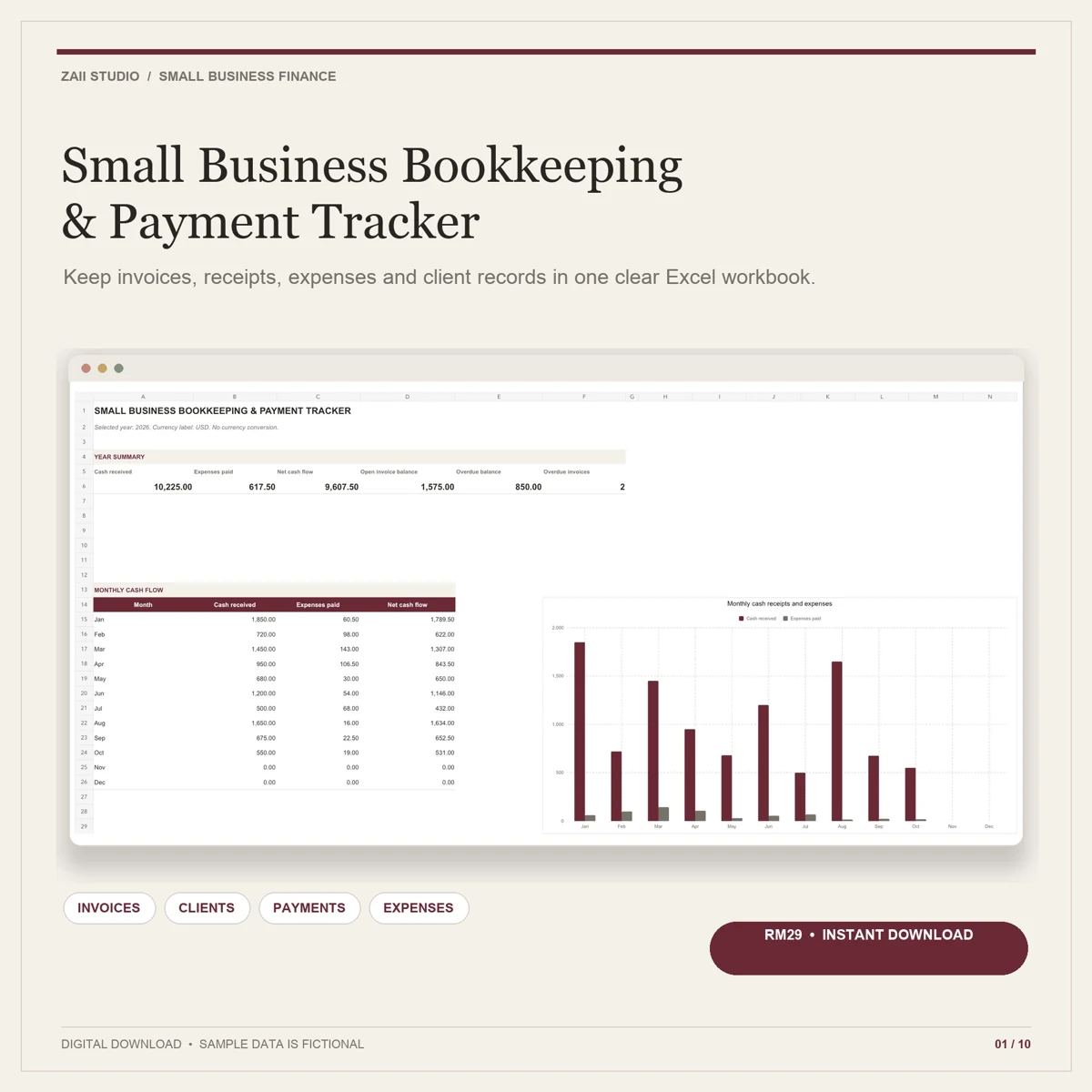
A small-business recordkeeping routine is easier to sustain when it happens in short, predictable passes. The goal is to keep invoices, payments and expenses current enough that you can see what needs follow-up—not to turn a spreadsheet into a substitute for professional accounting.
1. Record invoices when you send them
Give every invoice a unique reference and record its issue date, due date, client and amount. A current invoice register lets you see open balances and upcoming due dates without searching through sent messages. If you change an invoice, keep your own source document and update the register to match.
2. Enter receipts against the right invoice
Log each payment with its date, amount and matching invoice ID. For a partial payment, record the receipt rather than replacing the invoice amount; the remaining balance should stay visible until the invoice is settled. Check unmatched receipts and overdue items during your weekly review.
3. Keep expenses and client records consistent
Use the same client ID each time you record a client, and assign each expense to a consistent category. Keep receipts and original documents in their proper source folders—the tracker is a structured index, not a replacement for supporting records. Add a short note when an entry needs context.
4. Review the cash overview by period
A selected-year overview can help you review cash received, expenses paid, net cash flow and open invoice balances from the records entered. Compare the summary with your bank and source documents on a regular cadence. Currency labels do not convert amounts, so keep entries in a consistent currency when you want totals to be meaningful.
A 20-minute weekly close
Set aside a regular time to enter receipts and expenses, check upcoming due dates, follow up on past-due invoices and reconcile summary figures to source records. This workbook tracks invoices, payments and expenses; it does not create invoice documents, calculate tax or provide accounting advice. Confirm tax and reporting obligations with an appropriately qualified professional.
A practical workbook for the weekly close
The Small Business Bookkeeping & Payment Tracker is an Excel workbook for organizing invoices, clients, payments, expenses and a cash overview. It is a recordkeeping tool, not accounting or tax advice.
View the Small Business Bookkeeping Tracker on EtsyZAII Studio is the digital-products brand of ZAII SOLUTIONS. The linked download is an Excel workbook; check the Etsy listing for current price, file and compatibility details.